Valentine’s Day, Your Way: A Cozy Winter Dinner

Valentine’s Day has a way of arriving with a lot of noise: crowded restaurants, expensive menus, the pressure to make it “special.”

But over the years, I’ve found that the moments that stay with me most aren’t the elaborate ones. They’re the quiet ones. The cozy, homemade ones.

One of my favorite early dating memories is a simple night in watching Lady and the Tramp. When the spaghetti scene came on, my boyfriend (now husband 💗) disappeared into the kitchen… and came back with actual plates of spaghetti and meatballs.

It was playful. Unexpected. Tender. Not fancy. Not expensive. Just thoughtful.

And somehow unforgettable.

That’s the kind of Valentine’s warmth I want to hold onto—the kind you can create right at home.

A Pasta Dish for February Comfort

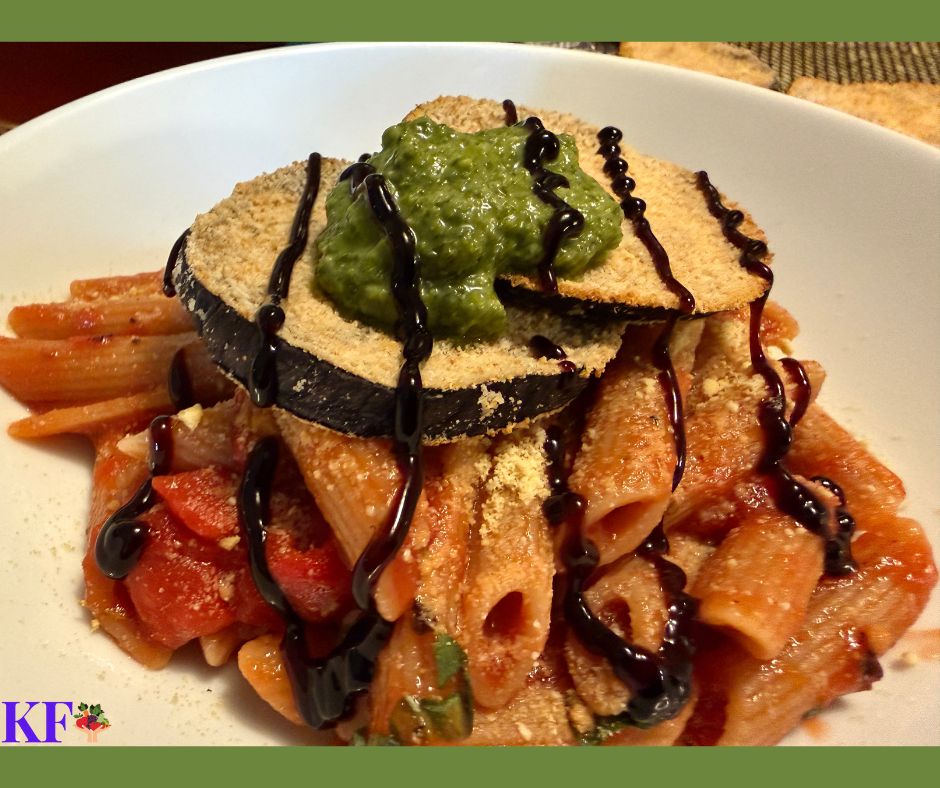
This week, I’m featuring Roasted Red Pepper Pasta, and it feels perfect for this season.

Roasted red peppers bring a sweetness and richness that tastes like summer tucked into winter. It’s warm, comforting, and simple enough for a weeknight with family… but special enough for a dinner for two.

It’s also a reminder that some of the best meals come from pantry staples, not reservations.

Recipe Link

You can find the full recipe here: Roasted Red Pepper Pasta

https://www.pamperedchef.com/pws/kathyfortner/recipe/Main+Dishes/30+Minutes+or+Less/Roasted+Red+Pepper+Pasta/1432174

Plant-based adaptations: Plant-based as written, but I added breaded eggplant cutlets in the picture above.

Gluten-free adaptation: Use your favorite gluten-free pasta.

A Gentle February Reminder

However you spend Valentine’s Day—romantic dinner, friendship celebration, or a quiet night to yourself—I hope it includes something warm.

A bowl of pasta.

A candle.

A moment of pause in the middle of winter.

Because sometimes the most meaningful celebrations are the ones we make at home.

What Joining a CSA Taught Me About Seasonal Eating

Every growing season begins the same way in our house—not with a grocery list, but with anticipation. We don’t ask what we feel like eating; we ask what’s coming next.

I’ve been a CSA member for years, and it’s changed the way my family experiences food—not just what we eat, but how we move through the seasons. CSA stands for Community Supported Agriculture. When you join, you purchase a seasonal share from a local farm and receive regular boxes of fresh, locally grown produce. It’s a direct connection to the people growing your food and a meaningful way to support local agriculture.

One of the unexpected joys of CSA life has been learning to look forward to specific vegetables. As the season shifts, my husband and I start anticipating what’s on its way. When leek and potato season approaches, we’re already talking about potato leek soup. Over time, we’ve begun curating favorite recipes that align with the rhythm of the harvest, letting the produce guide our meal planning instead of the other way around.

Being part of a CSA has also broadened our experience with vegetables. We’ve tried things we never would have chosen on our own and discovered produce we didn’t even know existed—like husk cherries. Some weeks feel familiar and comforting; others feel like a small culinary adventure, and I’ve come to value both.

More recently, I was reminded just how practical CSA life can be. This past weekend, as we prepared for a major winter storm, I was grateful to have a winter CSA share on hand. While others were making last-minute grocery runs, I spent Saturday cooking—making double batches of yellow split pea soup and a hearty mushroom stew. Parsnips, carrots, onions, and potatoes from our share all found their way into those pots. On Sunday evening, we finished the weekend with a simple root vegetable hash made with beets, sweet potatoes, and onions—again, all from our CSA. It felt grounding, nourishing, and reassuring in the best possible way.

I’ve belonged to several CSAs over the years, and each one has done things a little differently. Some focused on variety, others on abundance, and some—like our current one—offer winter shares that extend the season well beyond summer. Each experience has offered something unique and reinforced that there’s no single “right” way to participate—only what works best for your household.

Many CSAs open membership around this time of year. If you’re curious about finding one near you, localharvest.org is a great place to explore options, and their CSA guide at localharvest.org/csa/ offers helpful, practical information.

I’d love to know: Is there a seasonal dish you look forward to each year—or a way seasonal cooking has shown up in your life recently?

Reinvigorating Varying Veggies: A Fresh Start

Hello friends, old and new!

It’s been a while—since 2019, in fact—but I’m excited to announce that Varying Veggies is back and ready to grow with me (and hopefully with you!). Life has changed a bit: I’m now managing a three-generation household (with my husband, our younger son, and my dad) and navigating the joys and challenges that come with it.

Life in our kitchen is lively, and it keeps me inspired to find creative, practical ways to make healthy, plant-based meals that everyone enjoys. But some things haven’t changed: my love for whole foods, plant-based living, and sharing simple, delicious ways to enjoy them.

With my certificate in plant-based nutrition, I’ll be bringing you weekly posts full of inspiration—from CSA box finds and creative recipes to practical tips for thriving in the kitchen. I’ll also show how to take Pampered Chef favorites and convert them into plant-based versions so you can enjoy them guilt-free, too.

This space is for anyone curious about plant-based cooking, looking for ideas to make mealtime easier, or just wanting to see how a little creativity can transform everyday ingredients. I’m thrilled to start this new chapter and can’t wait to share it with you.

Stay tuned—there’s plenty coming your way, and I’d love for you to join me on this flavorful journey!

9 Ideas for Your CSA Box – July 16

img_7913

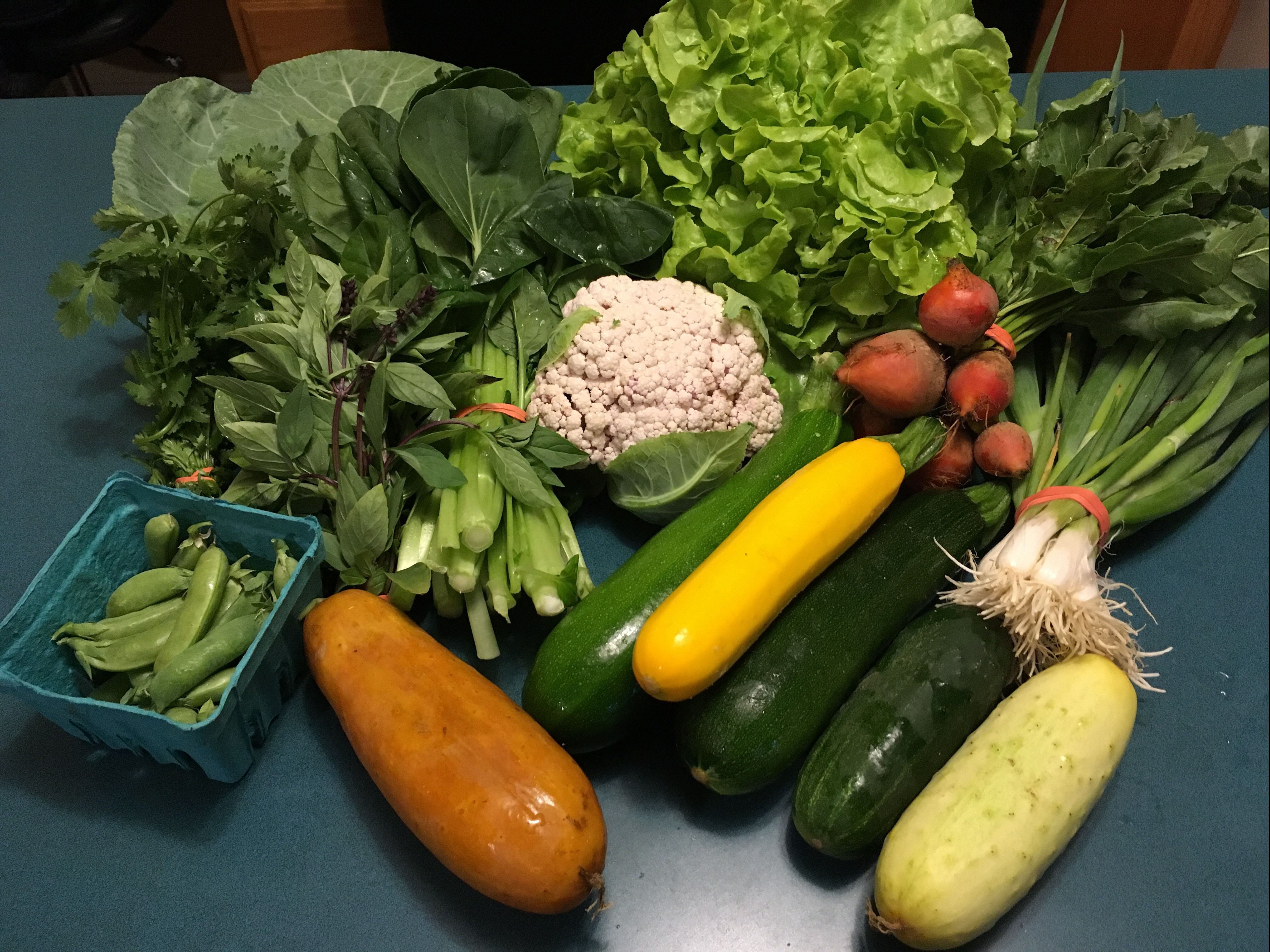
What a beautiful bounty from this week’s CSA box, as usual (I love farm box days!).  Green leaf lettuce, collards, tatsoi, golden beets, scallions, basil, cilantro, cauliflower, zucchini, squash, cucumbers, and snap peas (there were more, but I picked up the box just before dinner…).  Here are my initial thoughts on what to do with this amazing produce:

  1. Salad:  I know that seems like a given but it’s hard to beat a salad made of fresh from the farm produce.  We’re talking peak flavor!  I usually clean, pre-chop everything, and store it in containers in the fridge.  Anytime I want, I can pull those containers out and it’s an instant salad bar.
  2. Roast the beets, zucchini, squash, and cauliflower.  Roasted veggies are great for wraps and power bowls.  Save money and improve your health by packing your lunch.
  3. Pickle the cucumbers for burgers, salads, etc.
  4. Slice the cucumbers, zucchini, and squash to use as chips for hummus, salsa, and other dips.  More fiber, fluids (esp the cucumber), and nutrients than chips.  Also, fewer fat and calories than chips.  Last summer when we traveled, I dehydrated sliced cucumber and zucchini and packed it for snacks.  This really saved me when I had a hard time finding healthy options on the plane and in the airports.
  5. Saute/Stir fry for an Asian stir fry, pasta and sauce with veggies, or tofu scramble with veggies.
  6. Cauliflower:  steam and blend it to add a non-dairy creaminess to other dishes or rice it to replace or mix with rice.
  7. Collards:  make healthier burrito and enchilada wraps than tortillas
  8. Cilatro and Scallions:  Add garlic and tomatoes, chop, and you have an awesome salsa.
  9. Basil (bruised) and cucumber (sliced):  Add to water for a refreshing infused water.

What do you do with this season’s fresh produce?

Help! I have a Box of Produce and I’m Going on Vacation!

CSA 18 Week 6

A couple of weeks ago we picked up our weekly produce box the night before leaving for a 10 day vacation.  I could have scheduled a vacation hold for our box, but I really like seeing what comes each week and I didn’t want to potentially miss a favorite food.  So, I got as much packing done as possible early in the day and I spent the evening processing fresh produce.  Here’s what I did with each item:

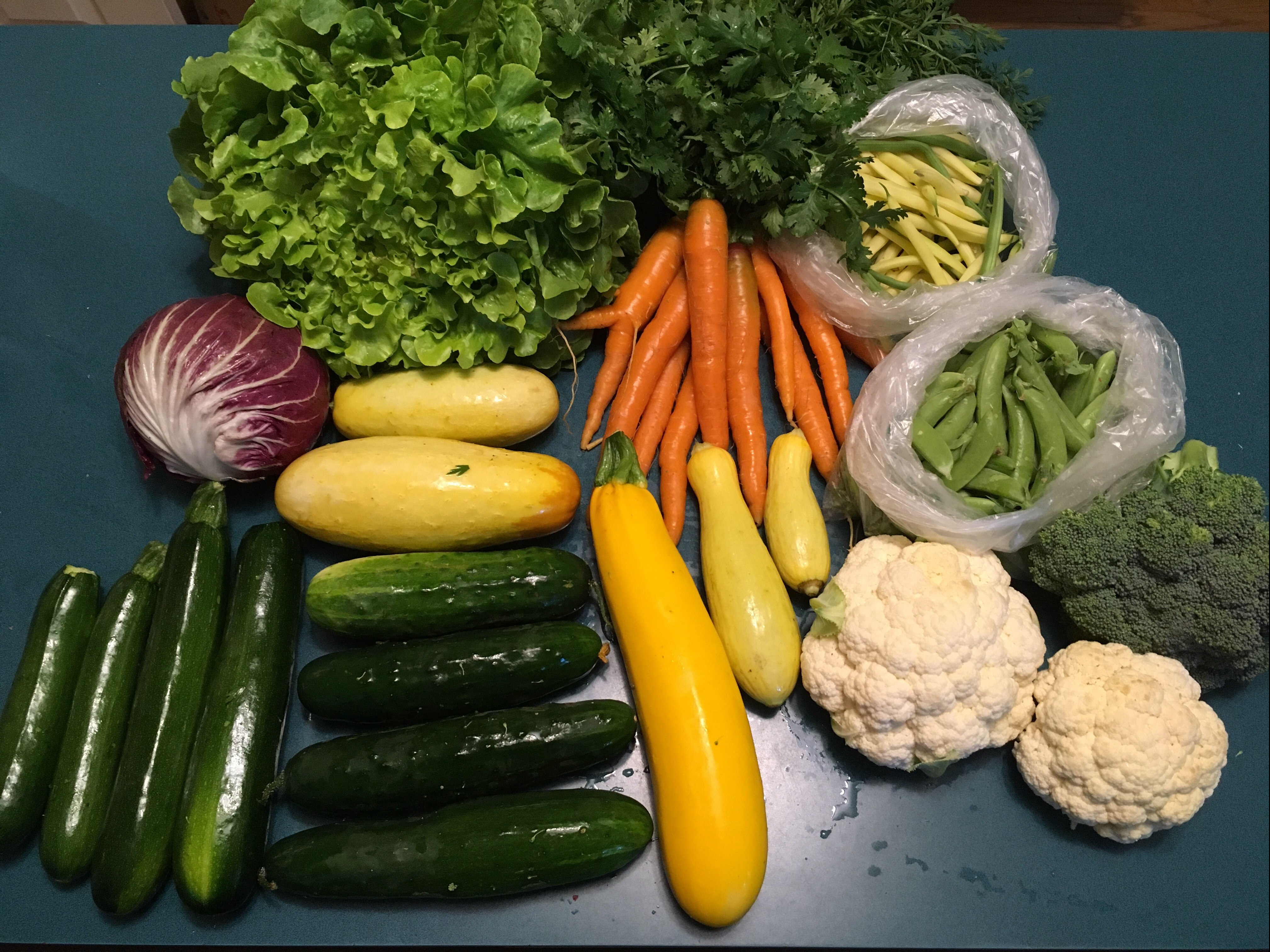
Broccoli, Cauliflower, Beans:  Steamed separately and froze in separate bags for later use.

Cucumbers:  pickled in vinegar, salt, and water.  I also sliced a couple and stored in a Ziploc bag for snacking/lunch on the plane.

Zucchini, Squash, and Carrots:  I sliced these and put one cup each in 1-quart Ziploc freezer bags and froze for future use in stir fry, masala, or soup.

Peas:  Stored in a Ziploc bag for snacking on the plane.

Lettuce and Radicchio:  Left for the house/dog sitter to enjoy.

Cilantro:  dried in the dehydrator overnight.

It was so nice to have fresh produce to munch on during our flights and at the start of our vacation.  I’m also looking forward to using the frozen vegetables this winter when I’m looking for something “warm and happy” to eat as I watch the snow fall.  Produce doesn’t have to go to waste, lost in the fridge (not that that’s ever happened to me…).  If it doesn’t look like you’re going to get to it before it goes bad, try one of the ideas above to preserve and use it later.

5 Things to do with this Week’s Produce Box

CSA 18 week 8
Late July CNY Produce

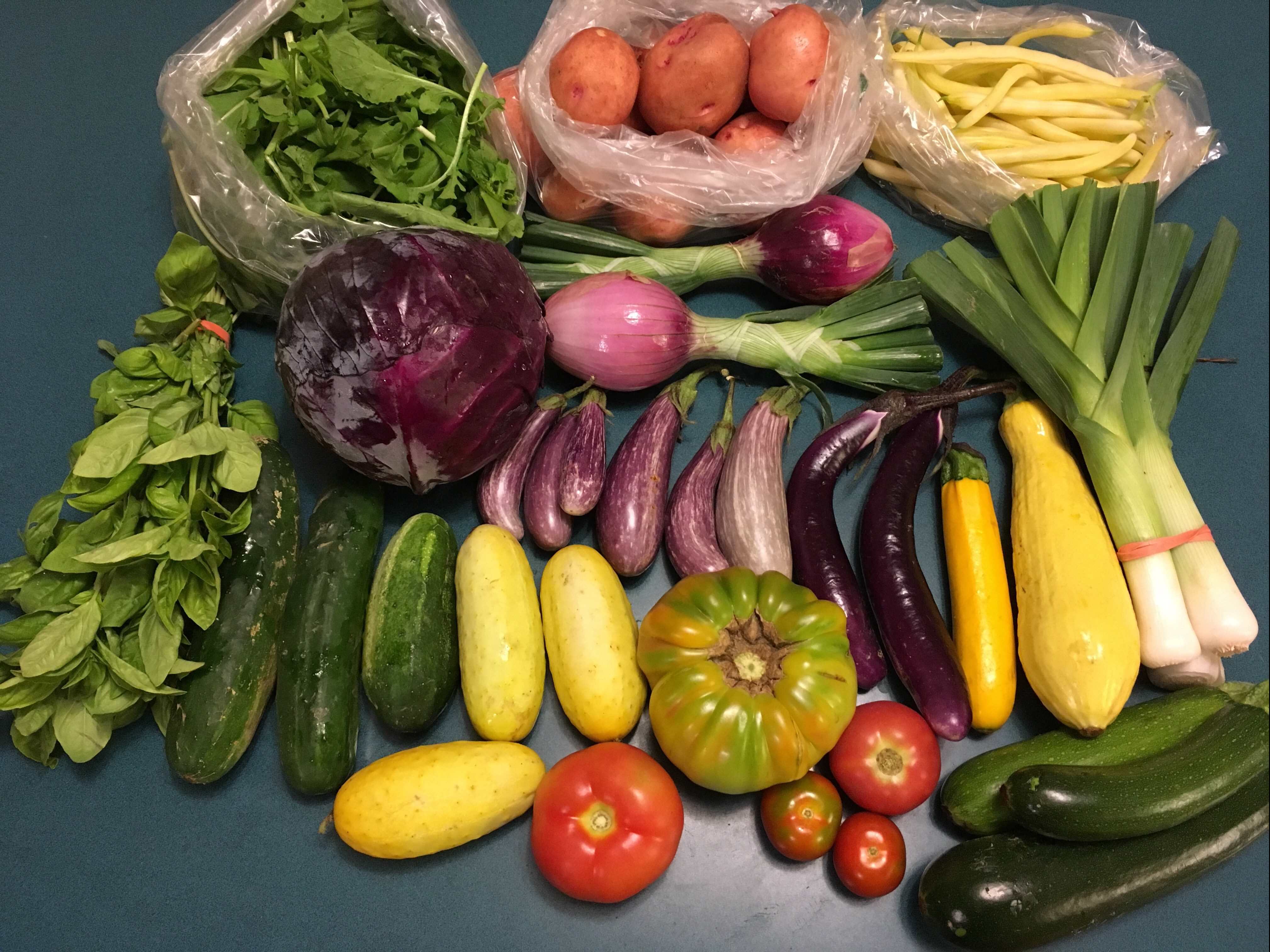
I love the days when I pick up our weekly produce box!  It’s great to see what is currently ripe and ready for picking and distribution.  I feel so in tune with the season and part of a larger community as members of a Community Supported Agriculture program.  Each week can also bring the question of “what do we do with ____?!”  We’ve been doing this long enough that we have seasonal favorites and we eagerly look forward to their respective dishes.  We’ve discovered new favorites (eggplant, ground/husk cherries) as well as items, try as we might, we just don’t like (fennel).  So, what do I do with our produce box?  The contents of this week’s box is pictured in this post.  Here are 5 things I did with it.

  1.  Vegetable Masala:  eggplant and zucchini, recipe from Kathy Hester’s The Easy Vegan Cookbook.
  2. Pizza:  Lots of great pizza toppings here.  We used the onion, squash, and basil.
  3. Potato Leek Soup:  1.5 lbs potatoes and 7 leeks plus  6 cups water and salt and pepper to taste.  Cooked all night in the crockpot.  That easy.
  4. Lunches:  chopped cucumbers make a great healthy side dish or mid-afternoon snack at work.
  5. German Red Cabbage:  red cabbage

This weekend I’ll probably saute the arugula and steam the yellow beans.  We’ll either eat them with meals for freeze for later use.  We’ll probably snack on the tomatoes or use on sandwiches.

I hope you are enjoying this season’s fresh produce and that these ideas help you try something new.

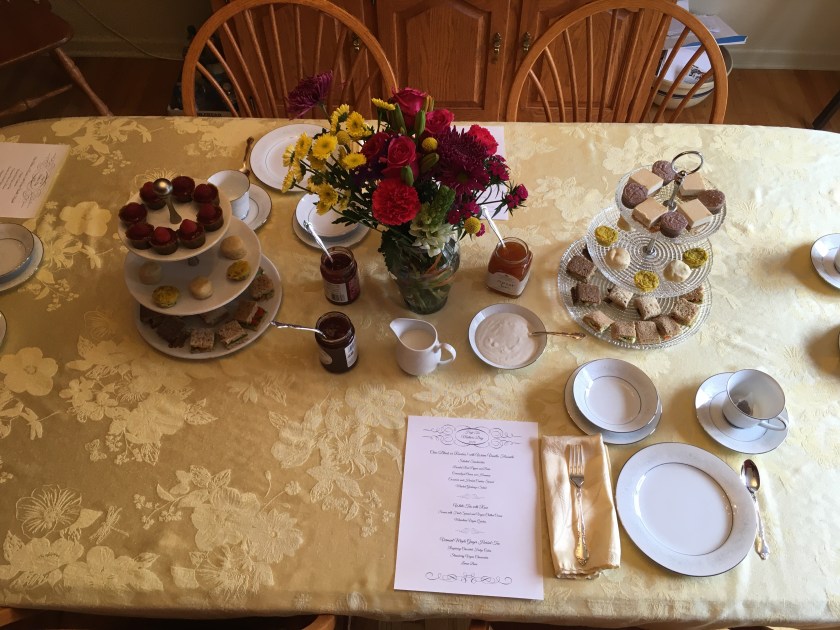
Tea/Finger Sandwiches

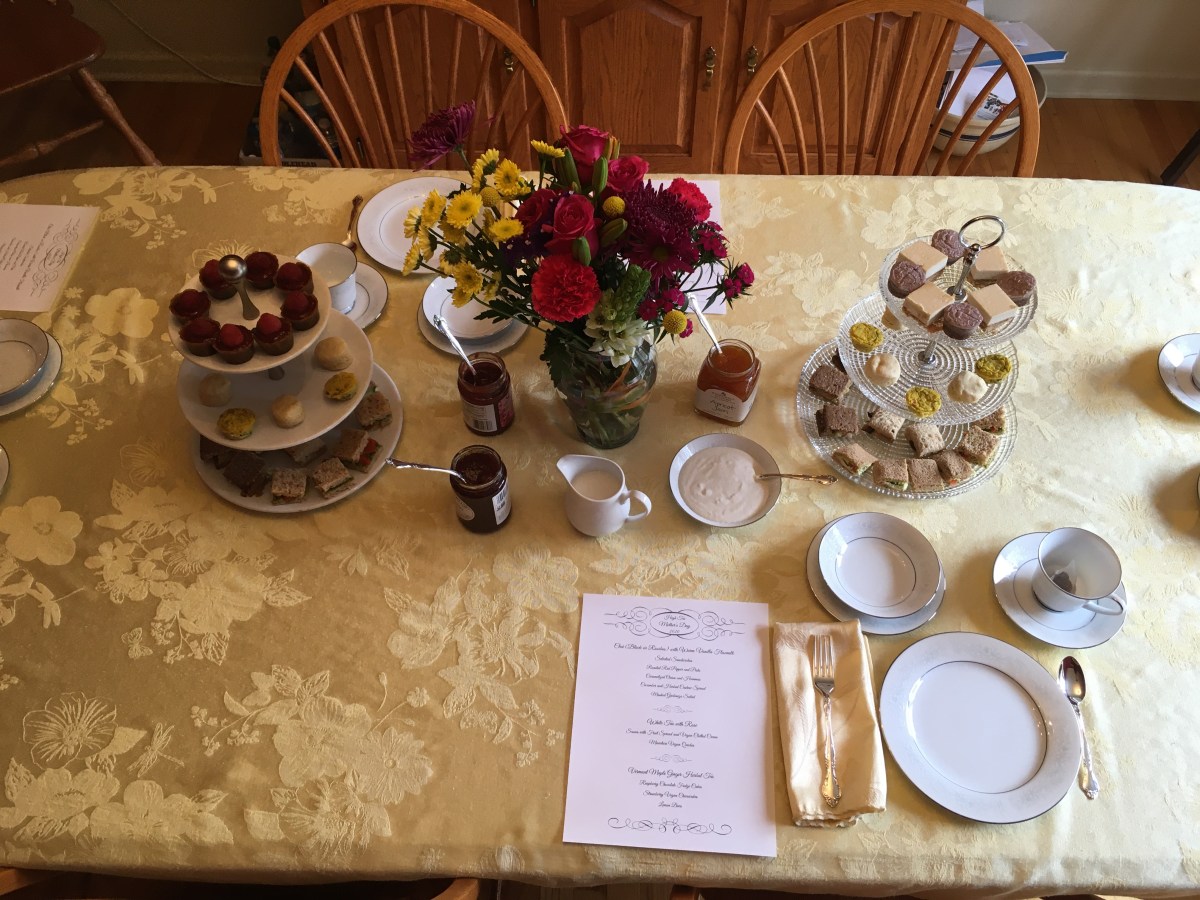
One element of Afternoon Tea is tea or finger sandwiches.  Tea or finger sandwiches are basically small sandwiches, with the crusts removed*, that can be eaten in 2-3 bites.  Sandwiches can be cut into triangles, rectangles, or squares.  While it can seem wasteful to cut off the crusts, the point is to have a small, dainty sandwich to accompany your tea, something you can hold gracefully with one hand.  I like to cut the crusts off the bread before filling the sandwiches.  I then store the crusts in the freezer until I have enough to process into breadcrumbs for other recipes.

Converting these sandwiches to a plant-based diet may seem challenging at first, but the flexibility and creativity allowed in filling options makes it quite simple.  Start with a good quality, whole grain bread.  I prefer 100% whole wheat, but I used Heidelberg Bread’s pumpernickel and multigrain in the pictures above (the store was out of the whole wheat at the time).  Then fill with your favorite filling or combination of fillings.  Here are some suggestions (a few are pictured above).  It’s that simple.  As long as you and your tea companions enjoy them, you can’t really go wrong.

Tempeh bacon, Avocado, and Lettuce
Hummus
Hummus and Cucumber
Nut Cheese
Nut Cheese and Cucumber
Nut Butter (peanut, almond, hazelnut, etc)
Nut Butter and thinly sliced fruit (ex: a strawberry)
Nut Butter and 100% Fruit Spread
100% Fruit Spread
Chocolate Nut Butter

Afternoon Tea

tea pot sm

With Mother’s Day quickly approaching, I thought it would be fun to spend the next few weeks talking about Afternoon Tea.  When researching this post, I found a wonderful explanation of Afternoon Tea vs. High Tea at AfternoonTea.co.uk I enjoy going for Afternoon Tea.  I don’t get to do it often, so it’s a real treat.  I have had a few delightful experiences though.  If you have the opportunity to visit Acadia National Park in Maine, I highly recommend stopping for tea at Jordan Pond House.  One year to celebrate my birthday, I requested Afternoon Tea at the Washington Duke Inn.  The MOPS group that I was a part of celebrated the end of one school year with a tea party – we even made elaborate newspaper hats!  Almost every week a group of ladies from my church get together for tea and knitting.  Each experience has been very different and special in it’s own way.  I’ve been looking for somewhere to go for Afternoon Tea in Central New York and I think I finally found it at Mad Hatter Restaurant in Rochester.  This is definitely now on my “to do” list.  They even have a vegan option, which is as close as I can find to my plant-based lifestyle.

As fun as it is to go out for tea, having friends in for tea or enjoying it with family at home is a great way to relax for a bit in the afternoon.  In the next few weeks I’ll share some of my own ideas for adapting Afternoon Tea to a whole foods, plant-based lifestyle, but I thought I’d start by sharing some recipes and site searches for some menu options.  Enjoy!

Dreena Burton – Breakfasts (scroll through for muffins, etc)

Dreena Burton – Desserts

Forks Over Knives – Breakfasts

Forks Over Knives – Desserts

Happy Herbivore – Muffins

Happy Herbivore – Desserts

PlantPure – Breads

PlantPure – Cake

PlantPure – Cookies

PlantPure – Muffins


Roasted Red Pepper Hummus

This is my husband’s hummus recipe.  I could honestly live on this!  We make it in giant batches, cooking 2 lbs of chickpeas at a time in our Instant Pot.  Then we freeze it in 1-1/2 cups jars in our freezer.  It makes about 7-8 jars.  Note:  the pictures are from when I was teaching a cooking class to a local homeschool co-op.  This is a very kid friendly recipe, both in taste and ease of making it.

hummus3sm

1 15-ounce can chickpeas, drained and add back ½ the liquid
3 cloves garlic
2 Tbsp tahini
2 Tbsp fresh lemon juice
½ tsp sea salt
2/3 of a red pepper, roasted skin side up at 400 °F for about 25 minutes (until there is some char on the skin)
5 drops of liquid smoke (optional)

Microwave chickpeas, chickpea liquid, and garlic for 4 minutes. Food process everything until smooth. Chill before serving (if you can wait that is). Chilling allows the hummus to thicken.

hummus1sm

hummus2sm

Southwestern Dinner Bar

Busy nights are common and ideals often fall victim to these nights. This is where having a plan, or even better, a routine makes a world of difference. One of our “go to” menus is a Southwestern theme. Think of your favorite burrito place, just at home. It’s really not that complicated and many times you can have it ready in less time (and definitely less money) than it takes to go out and pick it up. Just put out these ingredients:
 
rice (this is the most work, i.e. time consuming, but easy and can be made ahead)
beans (pinto, black, or both)
salsa
quacamole
lettuce
corn
tortillas (corn and/or wheat)
 
Now everyone can create a custom meal. I usually do a burrito bowl or salad. One of the kids makes a burrito every time – and requests future ingredients (love it!). Tacos are an option as well as tostadas. Burritos are great if you need to eat on the go and as leftovers for upcoming lunches. Keeping it quick and easy helps the evening flow, keeps the budget low, and leads to better health.